Let me speak to you plainly.
You were handed a story before you could read. A cube in a desert, a name, a direction to face, and a warning not to ask questions about any of it. Nobody sat you down and walked you through the evidence. They just told you. And you believed them, because everyone around you believed them too.
I am going to ask you to do one uncomfortable thing: separate what the Qur'an actually says from what men told you it says. Those are not the same document. One is text. The other is centuries of commentary written by people who already knew the answer they wanted.
“Do not mix the truth with falsehood, nor conceal the truth while you know it.” — al-Baqarah 2:42
Read that verse again. It is not addressed to outsiders. It is a warning to people inside the story — people who know, and cover it anyway. Why would a warning like that exist if nobody was ever going to do it?
Haram means pyramid. Say it out loud.
Open any Arabic dictionary. Haram (هرم) is the word for a pyramid. Al-Ahrām (الأهرام) is the word for the pyramids — it is the name of Egypt's largest newspaper, printed on the masthead every single morning. Nobody hides this. It is simply never said in the same breath as al-Masjid al-Ḥarām.
So here is the question this investigation refuses to drop: when the text names the sanctuary al-Masjid al-Ḥarām, and the Arabic word sitting inside that name is the same consonantal root the Arab world uses for the pyramids of Giza — is that a coincidence, or is that the thing you were trained not to notice?
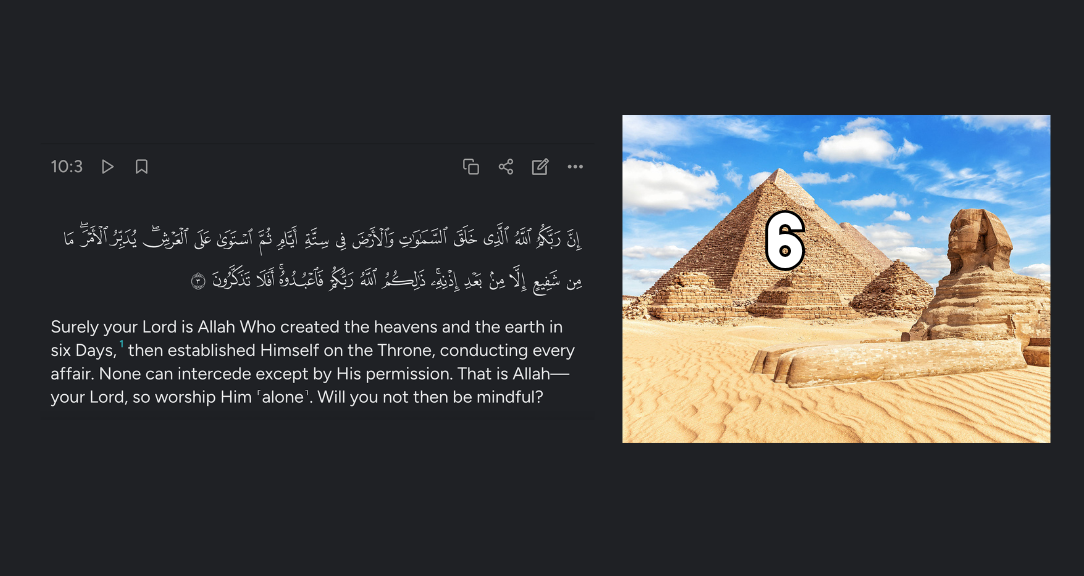
The House of Allah is described as the first House appointed for mankind — the oldest, raised for people, standing while everything else fell. Look at what is actually still standing from the ancient world. Then look at a cube that the Islamic sources themselves say was knocked down and rebuilt again and again and again.
They rebuilt it. Repeatedly. And told you it was eternal.
This is not a claim from an enemy of Islam. It is in the Muslim histories. Quraysh rebuilt it. Ibn al-Zubayr demolished it and rebuilt it to a different plan. Al-Ḥajjāj tore that down and rebuilt it again. Fire, flood, siege, renovation, renovation, renovation.
A building you can knock over with a catapult is not the first House appointed for mankind. It is a replica. And a replica requires an original.
“Among them is a group who twist their tongues with the Scripture so you think it is from the Scripture, and it is not from the Scripture… and they speak untruth about Allah while they know.” — Āl ʿImrān 3:78
The cover (Kafar) is the confession.
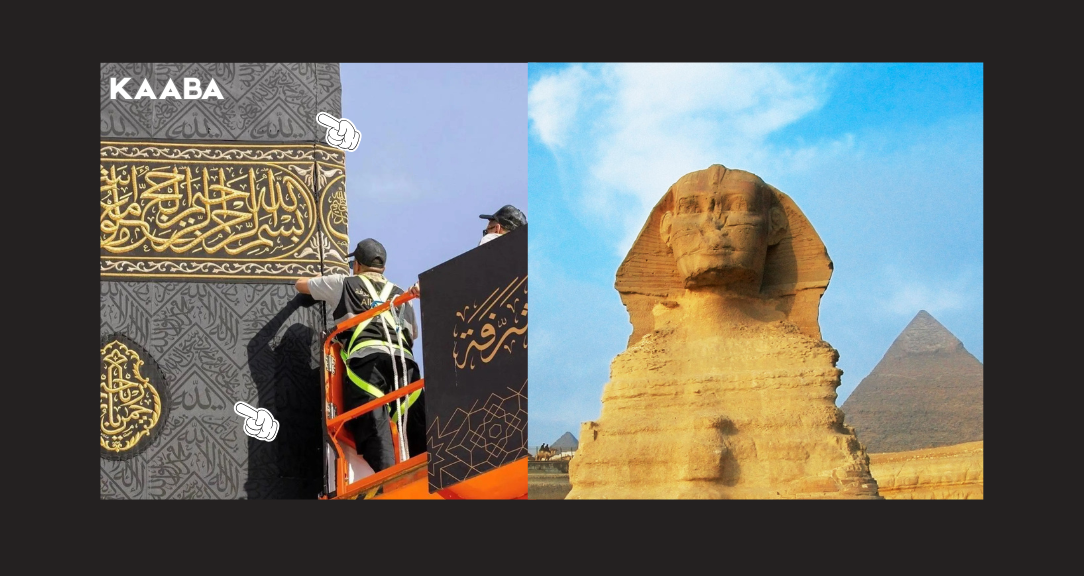
Look at the kiswah — the black cloth. Look at the geometry woven into it: triangles, repeating triangular fields, three-pointed forms stitched in gold across the entire surface of the building.
A cube does not need triangles. A cube has no triangle in it. So why is the covering of the cube saturated with the exact shape of the thing this investigation says was replaced? You do not decorate a building with the silhouette of a different building by accident.
The Arabic verb is kafara — to cover. The same root that gives you kāfir. To disbelieve, in the language of the text itself, is to cover something over. They covered the pyramid with a cube, then covered the cube with a cloth printed in pyramids, and called the man who points at it a disbeliever.
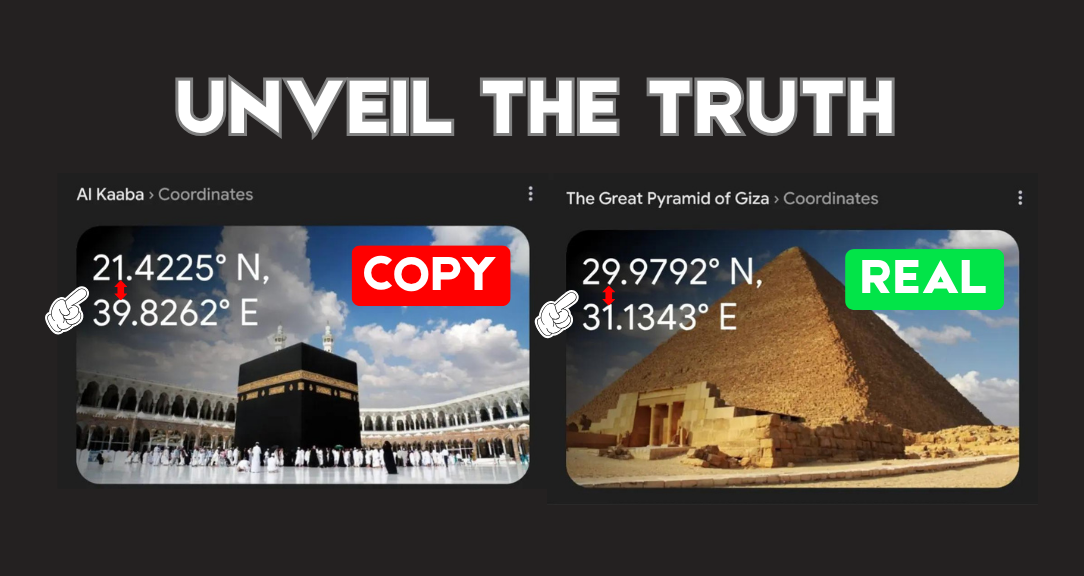
The Qur'an already told you who does this.
If a community were going to fabricate a sanctuary and sell it to the world, you would expect the text to warn about them by name. It does.
at-Tawbah 9:97 — “The bedouin Arabs are the worst in disbelief and hypocrisy, and more likely not to know the limits of what Allah has revealed.”
at-Tawbah 9:101 — “Among those around you of the bedouins are hypocrites, and among the people of Madinah too. They persist in hypocrisy; you do not know them, We know them.”
Yūnus 10:17 — “Who is more unjust than one who invents a lie about Allah or denies His signs?”
an-Naḥl 16:116 — “Do not say what your tongues falsely assert… inventing a lie against Allah. Those who invent lies against Allah will never prosper.”
az-Zumar 39:60 — “On the Day of Resurrection you will see those who lied about Allah, their faces blackened.”
Five separate warnings about fabricating a lie against Allah. Ask the man who tells you this investigation is forbidden which lie, exactly, those verses were sent down to describe.
And the name they gave Him: Pharaoh.
Here is the part that should stop you cold. Go looking for a single ancient Egyptian who called himself a “pharaoh.” The title as you were taught it — a line of god-kings named Pharaoh — is a construction. The word entered your schoolbooks through scripture and through translators, not from the Egyptians describing themselves that way.
So what was pr-ʿaa, the Great House? A house. The House. And the Qur'an puts a single line in the mouth of the one it calls Pharaoh: “I am your lord, the most high.” (an-Nāziʿāt 79:24).
Read that as this investigation reads it, and the whole architecture of the story inverts: they took the House of Allah, the Great House standing in Egypt, and taught the world to spit at the name. They called Allah Pharaoh. Then they built a cube in a valley and told you to face it.
You do not have to accept that reading tonight. You do have to notice that you were never once invited to consider it.